
Current, Quantified, and Ready on Demand
Circadian Risk generates board-ready physical security risk reports from live residual risk data at the click of a button, replacing weeks of manual data assembly with minutes of on-demand report generation and giving leadership the current, quantified view of organizational risk exposure they need.
Leadership Does Not Need Another Narrative Report. They Need Numbers, Trends, and a Plan.
The physical security board report has not fundamentally changed in decades. An assessor conducts observations, a practitioner translates them into a narrative, a manager edits and formats the result, and a leader presents it to a room of executives who spend the first ten minutes trying to understand what it says and the last ten minutes asking questions it cannot answer. How does this compare to last quarter? Which locations are the highest risk? What did we spend on security, and what did it change?
These are not unreasonable questions. They are exactly the questions a board should be asking. The problem is that most physical security reporting is not built to answer them. It is built to document activity, not communicate risk. Circadian Risk changes the reporting output from a narrative of observations to a quantified, trend-visible, board-designed risk intelligence summary that answers the questions leadership actually cares about.
What a Circadian Risk Board Report Puts in Front of Leadership
Quantified Residual Risk Scores for Every Location and Scenario
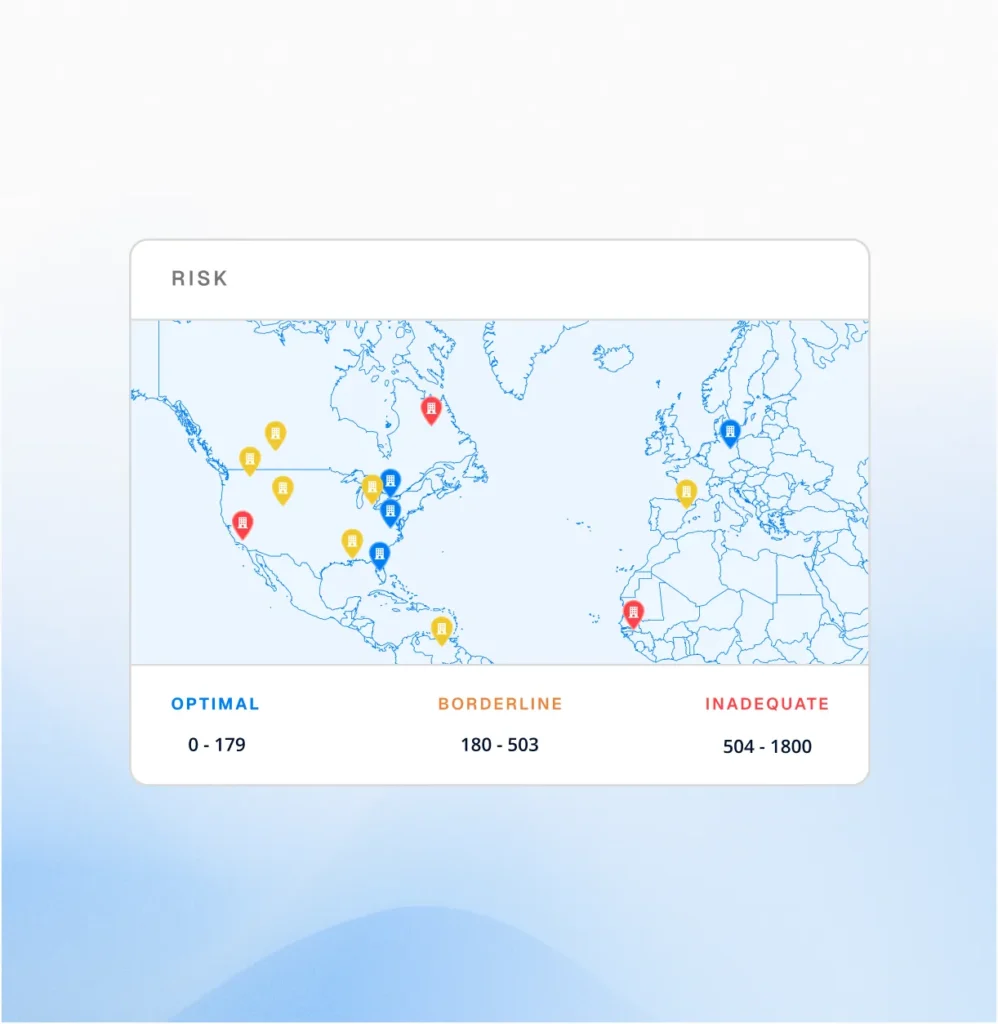
Not a written summary of what was observed. A number, by location, by scenario, reflecting the current state of residual risk across the organization’s entire physical security portfolio. Scores are derived from the same structured methodology applied consistently across every assessment, making them comparable across locations and meaningful over time.
Trend Data Showing Whether the Risk Program Is Performing
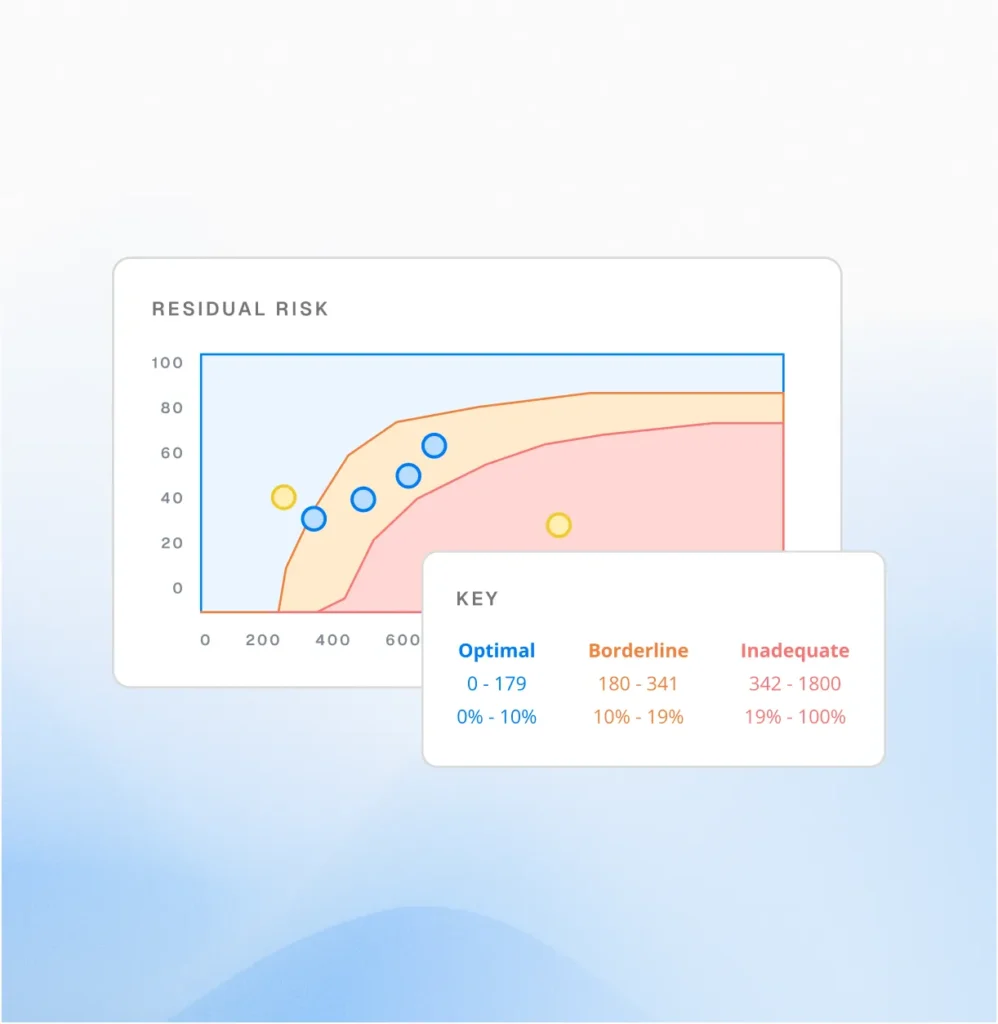
Boards need to know whether risk is improving, not just where it stands today. Circadian Risk’s reporting shows residual risk trends over time, giving leadership a clear picture of how scores have changed as a result of the security program’s activities and investments. This is what program accountability looks like at the board level.
Remediation Progress Connected to Risk Score Improvement
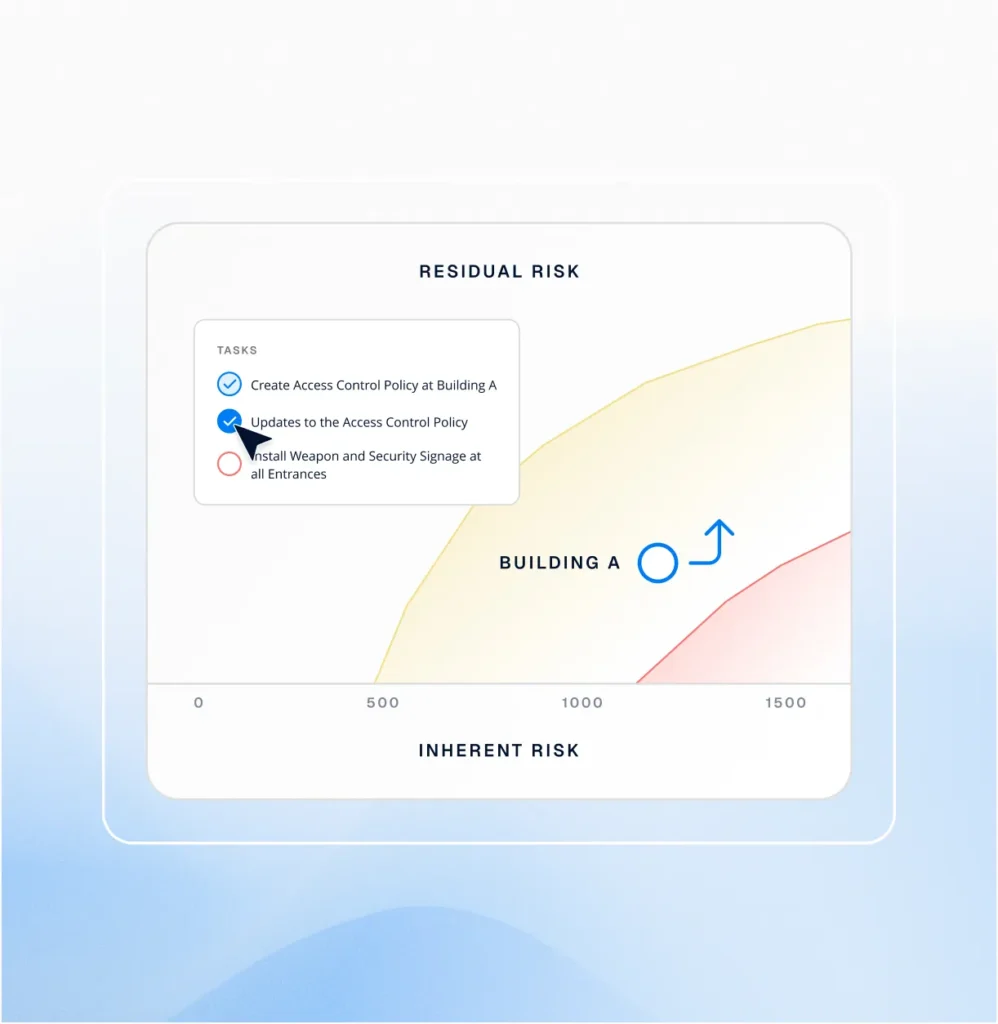
Every remediation action completed during the reporting period is connected to its impact on the residual risk score. Leadership can see not just what the security team did but what it changed, expressed as a quantified reduction in organizational risk exposure rather than a list of completed tasks.
The Weeks of Report Writing You Will Never Have to Do Again
Security leaders using Circadian Risk consistently report that board-level report preparation drops from days or weeks of manual effort to minutes of on-demand generation. The platform aggregates assessment data, remediation progress, and risk score trends from across the entire portfolio automatically. What previously required pulling data from multiple sources, translating it into executive language, formatting it into a presentable document, and reviewing it for accuracy is replaced by a report generation process that takes as long as it takes to click a button and choose a scope.
Frequently Asked Questions About Physical Security Executive and Board Reporting
What should a physical security board report include?
An effective physical security board report should include quantified residual risk scores for every location and every relevant scenario, trend data showing how those scores have changed over the reporting period, a summary of remediation actions completed and their impact on risk scores, and a forward-looking view of the highest-risk locations and scenarios requiring leadership attention or investment decisions. Circadian Risk generates all of this automatically from live residual risk data, without manual assembly.
How does Circadian Risk reduce the time required to produce a board report?
Circadian Risk aggregates assessment data, remediation progress, and risk score trends from across the entire portfolio in real time. When a board report is needed, security leaders select the scope, time period, and scenarios to include, and the platform generates a formatted report reflecting current conditions. The manual process of pulling data from multiple sources, translating it into executive language, and formatting it for a board audience is eliminated entirely.
How does Circadian Risk make physical security risk understandable to non-security executives?
Circadian Risk’s executive reporting is designed for a leadership audience that needs to understand organizational risk exposure without a background in physical security methodology. Reports present residual risk scores, trend data, and remediation progress in a clear, visually organized format that communicates exposure, performance, and priority directly, without requiring the reader to interpret assessment terminology or security practitioner language.
Can Circadian Risk reports be customized for different executive audiences?
Yes. Reports can be filtered and scoped for different audiences. A board presentation may focus on portfolio-wide risk trends and highest-risk locations. An audit committee report may focus on compliance scenario scores and remediation documentation. A C-suite briefing may focus on the scenarios most relevant to current organizational priorities. Each view pulls from the same live data and requires no separate data preparation.
See What Board-Ready Physical Security Reporting Looks Like When It Takes Minutes, Not Weeks
Walk through Circadian Risk’s executive reporting capabilities with a member of our team. See how your organization’s next board presentation would look when every number is current, every trend is visible, and the whole thing is ready before the meeting starts