
Know Where Your Organization Stands, Not Where It Stood Last Quarter
Circadian Risk gives executive leaders and boards a quantified, current view of physical security risk across the organization, in a format designed for leadership decision-making rather than security practitioner review.

Physical Security Risk Is an Organizational Liability. Leadership Needs to See It.
Physical security incidents are among the most visible and most costly events an organization can face. A workplace violence event, a significant theft, a compliance failure under a major regulatory framework, a natural disaster that a location was not adequately prepared for: these events produce financial losses, regulatory consequences, reputational damage, and legal liability that reach well beyond the security department. They are organizational events that boards and executives are accountable for, and that accountability is increasingly difficult to discharge without documented evidence of a systematic, standards-aligned approach to physical risk management.
Most organizations cannot provide that evidence because they do not have a systematic approach. Physical security programs produce narrative reports that are months old before they reach leadership, do not quantify risk in terms that translate to organizational exposure, and offer no way to compare risk levels across locations or track improvement over time. Circadian Risk changes what leadership can see, what they can ask for, and what the security team can deliver in response.

What Circadian Risk Puts in Front of Executive Leadership and Boards
A Quantified View of Physical Risk Exposure Across the Entire Organization
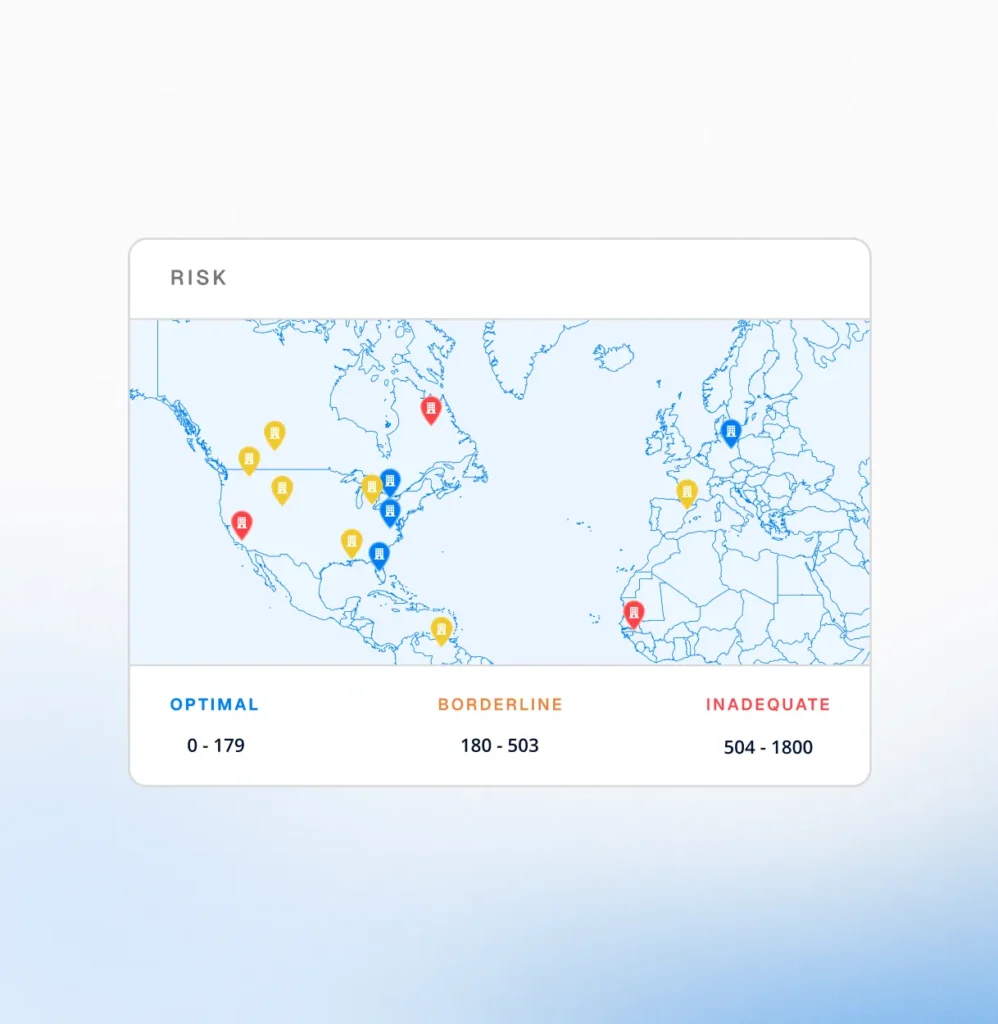
Circadian Risk produces a residual risk score for every location and every scenario in the portfolio, surfaced on a dashboard that gives leadership a current, comparable view of where the organization is most exposed. Not a narrative summary of observations. A number, by location, by scenario, updated in real time.
Trend Data That Shows Whether the Risk Program Is Performing
Boards do not just need to know where risk is today. They need to know whether it is improving. Circadian Risk’s dashboard shows residual risk trends over time, giving leadership a clear picture of whether the security program is reducing exposure or whether scores are holding steady or moving in the wrong direction. This is what program accountability looks like.
Board-Ready Reporting Generated on Demand From Live Data
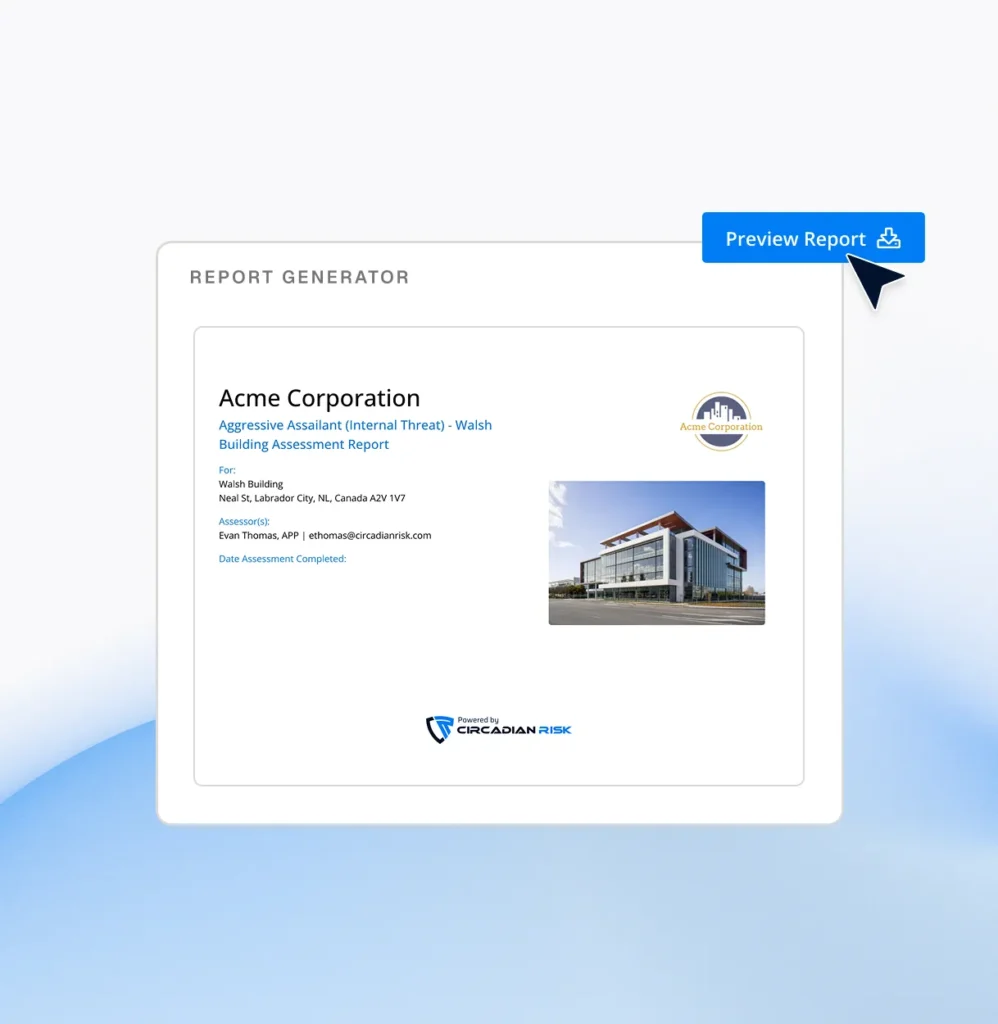
Circadian Risk generates formatted executive risk reports at the click of a button, pulling from live residual risk data rather than manually assembled summaries. Reports are designed for a leadership audience: clear, quantified, and structured around the exposure and trend information boards need to fulfill their oversight function.

The Questions Boards Should Be Asking About Physical Security Risk
Circadian Risk gives the security team the data to answer each of these questions with confidence.
Can you answer these questions?
- “Which of our locations carries the highest risk of a workplace violence event right now?”
- “What physical security investments did we make this year, and how much did they reduce our risk exposure?”
- “Is our physical security program aligned to a recognized standard, and can we demonstrate that to a regulator or in a legal proceeding?”
- “How has our overall physical risk profile changed over the past twelve months?”
The Organizational Value Circadian Risk Delivers

Portfolio-wide physical security visibility enabled SpartanNash to consolidate procurement and prioritize security investments intelligently, recovering three times the platform cost through bulk purchase savings in its first year alone.

By replacing manual assessment and report writing with a structured platform, Redstone doubled the number of locations assessed annually, expanding physical security program coverage across its full branch network without increasing team size or budget.

A Physical Security Program That Holds Up When It Matters Most
Circadian Risk is a partner of ASIS International, the world’s largest security standards organization. Organizations that build their physical security programs on Circadian Risk’s ASIS-aligned assessment frameworks have a documented, internationally recognized methodology to stand behind when their program is evaluated by regulators, auditors, legal counsel, or insurers. In a landscape where physical security incidents increasingly produce legal and regulatory scrutiny, that foundation is not a differentiator. It is a requirement.
Frequently Asked Questions From Executive Leaders and Board Members
What should executive leadership and boards expect from a physical security risk program?
Executive leadership and boards should expect a physical security program to produce a current, quantified view of organizational risk exposure that can be acted on, reported on, and defended to external parties. This means risk scores that are updated in real time rather than produced annually, a methodology grounded in recognized standards, a documented audit trail of what was assessed and what was done about it, and reporting that communicates exposure and trend in terms that translate directly to organizational liability and value.
How does Circadian Risk help boards fulfill their oversight responsibility for physical security risk?
Circadian Risk gives boards access to quantified residual risk scores for every location and every scenario in the organization’s portfolio, trend data showing how those scores have changed over time, and on-demand reports that communicate risk exposure clearly without requiring a security background to interpret. This gives board members the information they need to ask informed questions, evaluate program performance, and fulfill their governance responsibility for physical risk management.
How does Circadian Risk help justify physical security investment to leadership?
Because every remediation action in Circadian Risk is connected to its impact on the residual risk score, the return on physical security investment is directly measurable. Leadership can see the risk score before an investment was made and the score after, quantify the risk reduction achieved, and evaluate whether the program is allocating resources to the areas of highest exposure. This makes the business case for physical security investment grounded in data rather than incident history or intuition.
What standards does Circadian Risk's methodology align to?
Circadian Risk is a partner of ASIS International, the world’s largest organization for security management professionals. Assessment frameworks within the platform can be built on ASIS International standards, giving every risk score a foundation in internationally recognized, professionally validated criteria. This means organizations can point to a recognized methodology when their physical security program is evaluated by regulators, legal counsel, insurers, or auditors.
See What Your Organization's Physical Risk Profile Looks Like When Leadership Has the Full Picture
Walk through Circadian Risk with a member of our team. See how your organization’s physical security program would look when risk is quantified, current, and reported in a format built for the boardroom.