
Structured, Scenario-Based, and Built to Produce a Quantified Risk Score
Circadian Risk is the only physical security risk assessment platform that takes organizations through a structured, repeatable process from inherent risk through controls assessment to a quantified residual risk score, for every scenario, at every location, every time.
What a Physical Security Risk Assessment Should Actually Produce
A physical security risk assessment should answer two questions: how much risk does this location face, and how effectively is the organization addressing it? Most assessments answer neither. They document what an assessor observed, note what appears to be deficient, and recommend corrective actions. What they do not produce is a quantified measure of the baseline risk that exists at the location before any controls are considered, a structured evaluation of how effectively each countermeasure addresses each specific threat, or a residual risk score that tells the decision-maker how much risk remains after controls are factored in.
Circadian Risk was built to produce exactly those outputs. Every assessment conducted on the platform moves through a three-layer methodology that converts raw site data into a quantified, scenario-specific residual risk score that a security leader can act on, report on, and use as a baseline for measuring improvement over time.

How a Circadian Risk Physical Security Assessment Works
Layer One — Inherent Risk Assessment
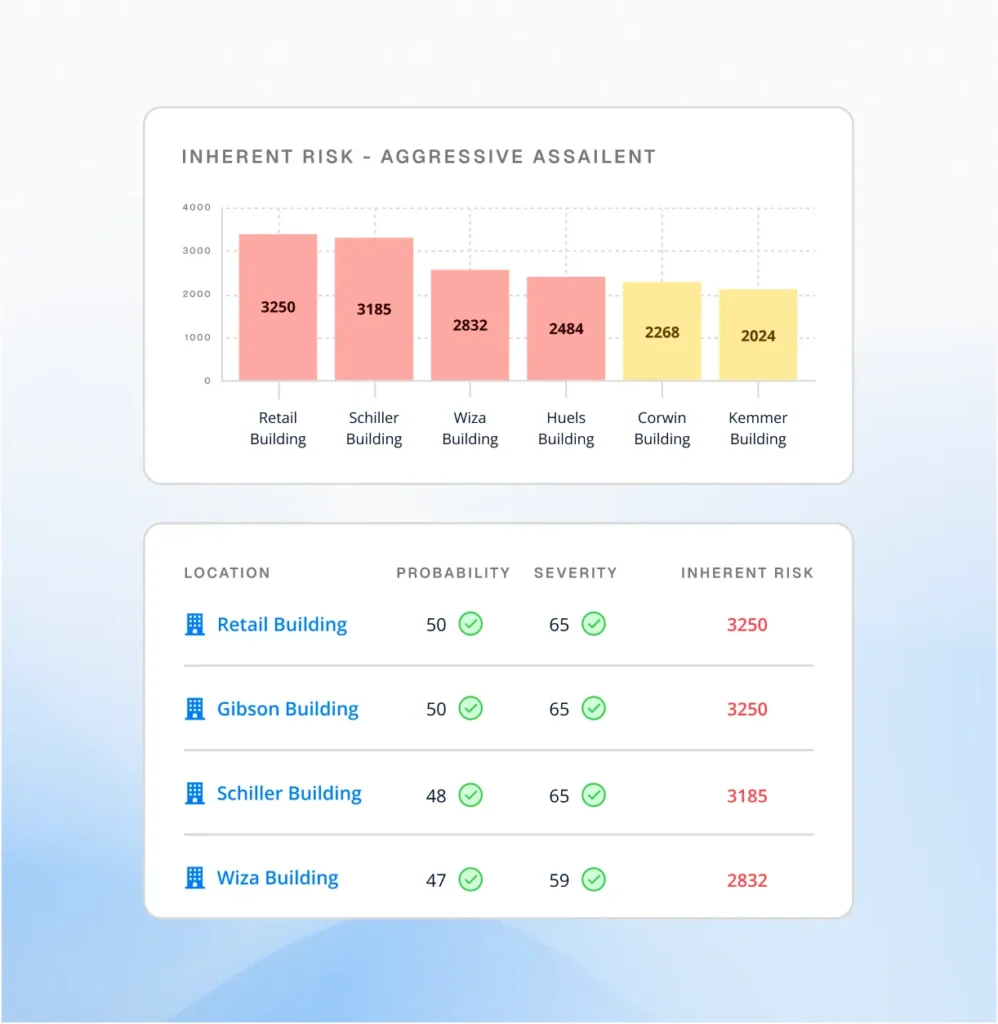
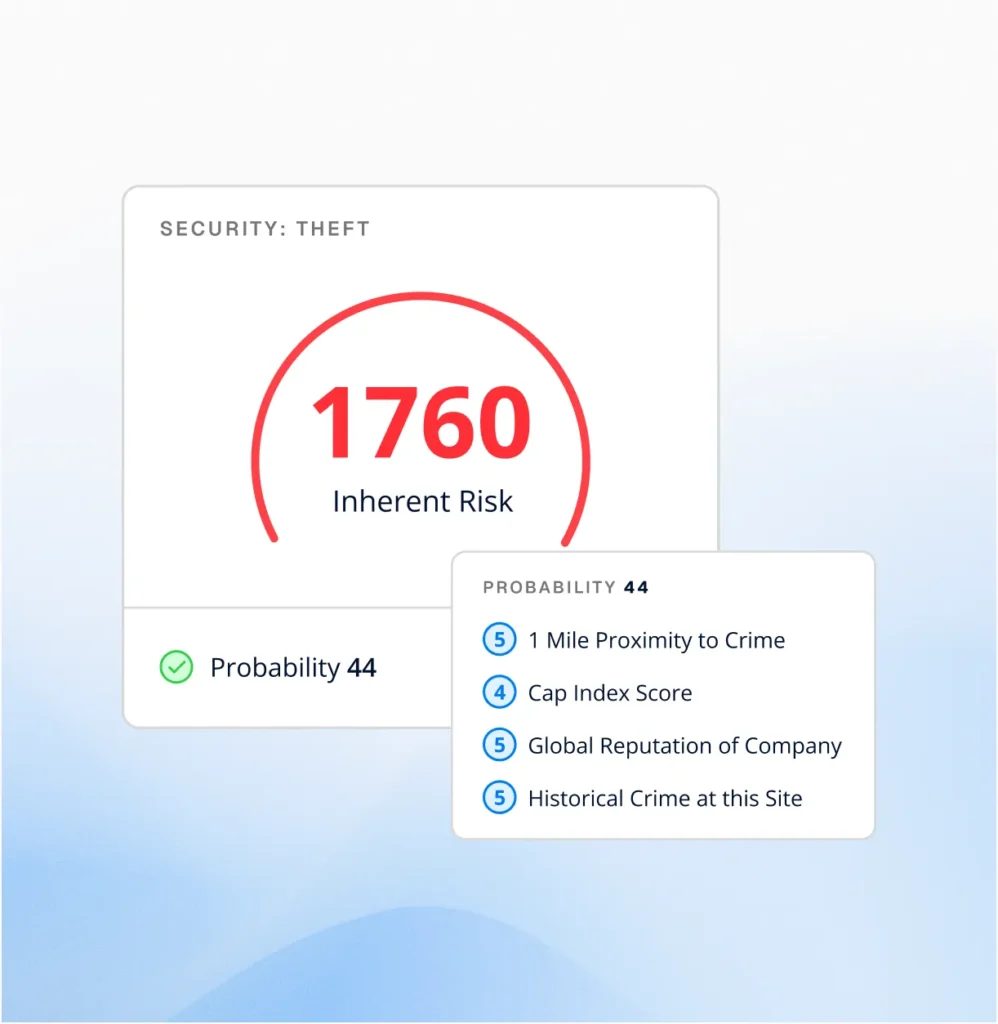
Before evaluating a single countermeasure, Circadian Risk establishes the baseline risk that exists at the location for every relevant scenario. The Dynamic Threat and Impact Assessment evaluates the probability and severity of each threat type, each hazard scenario, and each applicable compliance framework based on the specific characteristics of that location. The result is an inherent risk score for every scenario at that site that reflects actual exposure rather than generic threat assumptions.
Layer Two — Controls and Vulnerability Mapping
With the inherent risk baseline established, every physical security countermeasure at the location is documented and evaluated scenario-specifically on an interactive map interface. Cameras, access control systems, barriers, fire suppression equipment, lighting, and every other relevant asset is classified as compliant, deficient, or absent relative to the scenario being assessed. The result is a complete, spatially accurate picture of what the organization has in place and how effectively it addresses each threat.
Layer Three — Residual Risk Scoring
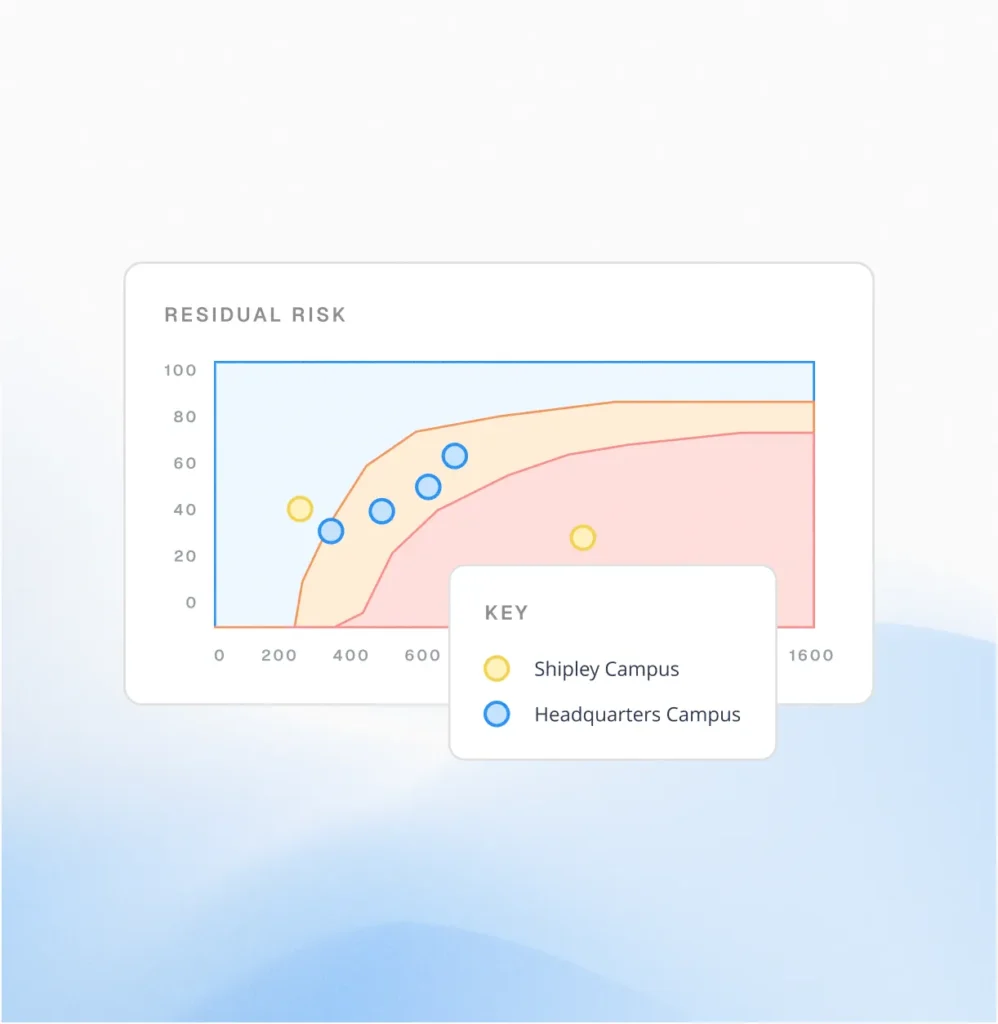
Inherent risk minus the effect of controls equals residual risk. Circadian Risk calculates that score for every scenario at every location and surfaces it on a real-time dashboard that updates automatically as assessments are completed and deficiencies resolved. The residual risk score is the number that tells security leaders where they actually stand, not where a checklist says they should be.
Why Physical Security Risk Assessment Must Be Scenario-Specific
Different Threats Require Different Variables
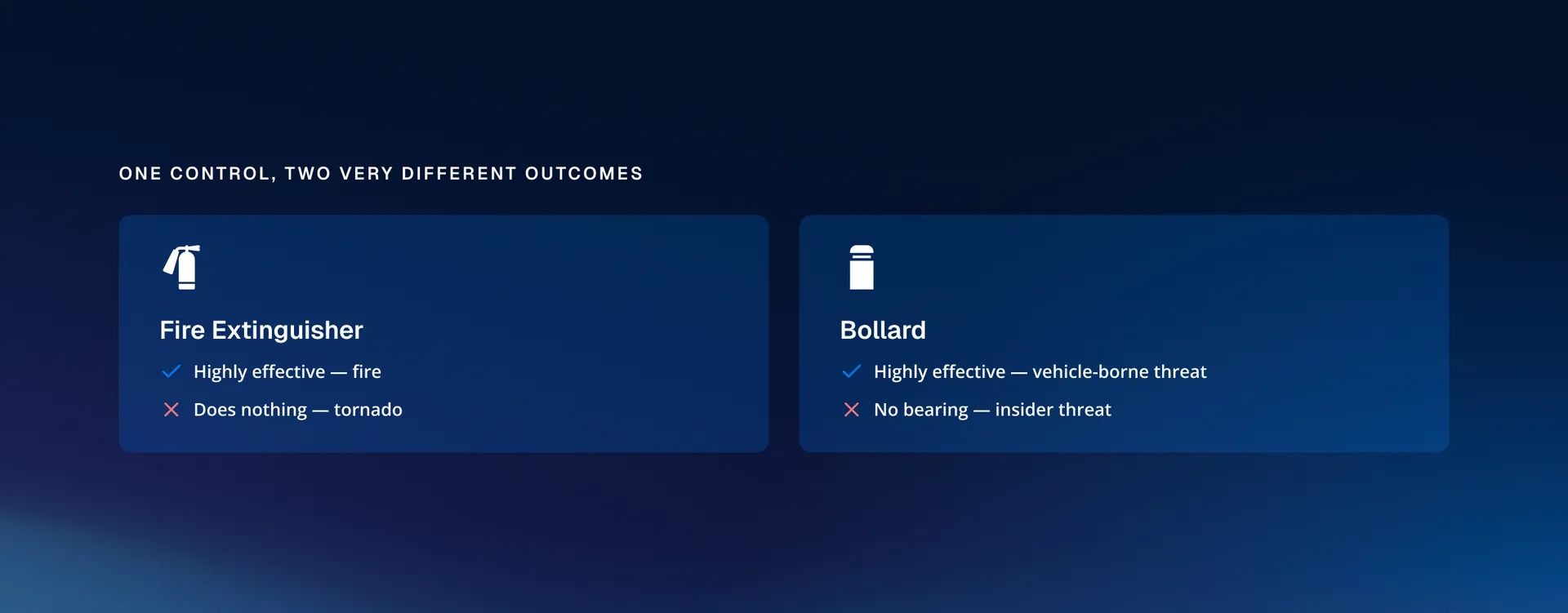
A fire extinguisher is an effective countermeasure for fire risk. It does nothing for a tornado. A bollard reduces vehicle-borne threat risk. It has no bearing on a workplace violence assessment. The controls that matter depend entirely on the threat being assessed, which means evaluating them without specifying the scenario produces a count rather than a risk measurement.
Circadian Risk assesses every relevant scenario independently using the variables that actually drive risk for that specific threat type. Active shooter assessments weigh organizational and human factors. Flood assessments weigh geographic and environmental factors. Compliance assessments evaluate controls against the specific requirements of the applicable standard. The resulting risk score is precise, defensible, and genuinely actionable.

An Assessment Platform That Integrates ASIS International Standards
Circadian Risk is a partner of ASIS International, the world’s largest security standards organization. Assessments conducted on the platform can be grounded in ASIS-aligned frameworks, giving security teams a methodology backed by internationally recognized, professionally validated criteria.
What a Structured Physical Security Risk Assessment Delivers

Replacing ad hoc assessments with a structured, portfolio-wide platform gave SpartanNash the consistent risk data it needed to consolidate procurement intelligently, recovering three times the platform cost through bulk purchase savings in its first year.

Structured digital assessments replaced manual report writing across Redstone’s full branch network, doubling the number of locations assessed annually without increasing team size or budget.
Frequently Asked Questions About Physical Security Risk Assessment
What is a physical security risk assessment?
A physical security risk assessment is a structured evaluation of the threats a location faces and the effectiveness of the security controls in place to address them. A comprehensive assessment establishes a baseline of inherent risk for every relevant scenario, evaluates every physical security countermeasure against the scenarios it is meant to address, and produces a residual risk score that quantifies how much risk remains after controls are factored in. Circadian Risk conducts this process through a three-layer methodology, producing scenario-specific residual risk scores that can be compared across locations and monitored over time.
How is Circadian Risk different from a traditional physical security assessment?
Traditional physical security assessments produce a written report documenting observations, deficiencies, and recommendations. Circadian Risk produces a quantified residual risk score for every scenario at every location assessed, a complete physical security asset inventory mapped to an interactive floor plan, and a live dashboard that updates as conditions change and remediation actions are completed. The deliverable is not a document. It is a risk intelligence system that continues to produce value after the assessment event ends.
How often should a physical security risk assessment be conducted?
Most security frameworks recommend annual assessments at minimum, with more frequent assessments for high-risk locations or following significant changes in the threat environment, operational characteristics, or physical security infrastructure. Circadian Risk supports continuous risk monitoring between formal assessment cycles by updating residual risk scores in real time as countermeasures change and remediation tasks are completed, giving security leaders a current picture of risk exposure rather than a snapshot from the last assessment date.
What scenarios does Circadian Risk assess in a physical security risk assessment?
Circadian Risk supports scenario-based assessment across three categories: threat scenarios including active shooter, workplace violence, theft, vandalism, arson, and espionage; hazard scenarios including tornadoes, floods, hurricanes, earthquakes, and wildfires; and compliance scenarios including CT-PAT, PCI DSS, Joint Commission healthcare standards, and ASIS International standards. Custom scenarios can also be built to an organization’s own frameworks and internal standards.
See What a Structured Physical Security Risk Assessment Looks Like in Practice
Walk through Circadian Risk’s assessment methodology with a member of our team. See how your organization’s physical risk profile would look when every location is assessed on a consistent framework and every result is expressed as a quantified, comparable risk score.