
Meet Your Standards, Measure Your Risk, Close Your Gaps
Circadian Risk treats compliance not as a checklist to complete but as a risk scenario to assess and score, giving security and compliance teams a quantified view of compliance exposure across every location and every applicable framework.

Why Physical Security Compliance Is a Risk Problem, Not Just a Documentation Problem
Most organizations approach physical security compliance as a documentation exercise. An auditor visits, a checklist is completed, findings are documented, and a report is filed. Compliance is achieved or it is not, and the result is binary. What that process does not produce is any meaningful understanding of how much compliance risk the organization is carrying, which locations are most exposed to a compliance failure, or what the relative priority of compliance remediation is compared to other physical security investments.
Circadian Risk reframes compliance as a risk scenario. Just as the platform assesses the probability and severity of an active shooter event or a flood at a specific location, it assesses the probability and severity of a compliance failure under a specific standard at that location. The result is a compliance risk score that sits alongside threat and hazard scores on the same dashboard, enabling security and compliance leaders to see their full risk picture in one place and make resource allocation decisions that reflect the complete range of exposure the organization faces.
Physical Security Compliance Frameworks Supported by Circadian Risk
CT-PAT (Customs-Trade Partnership Against Terrorism)
CT-PAT establishes minimum physical security standards for supply chain participants including importers, carriers, brokers, and manufacturers. Circadian Risk converts CT-PAT requirements into a structured scenario assessment that produces a quantified compliance risk score for every applicable location, making it straightforward to identify which sites meet the standard and which require remediation.
PCI DSS (Payment Card Industry Data Security Standard)
PCI DSS includes physical security requirements for facilities that store, process, or transmit cardholder data. Circadian Risk assesses PCI DSS physical security compliance as a scenario, evaluating countermeasures against the specific requirements of the standard and producing a compliance risk score that reflects actual exposure rather than a pass or fail determination.
Joint Commission Healthcare Standards
The Joint Commission’s physical environment and security standards apply to hospitals, health systems, and other accredited healthcare organizations. Circadian Risk assesses compliance with Joint Commission physical security requirements across all applicable locations, giving healthcare security leaders a quantified view of compliance exposure that integrates directly with their broader physical risk program.
K-12 School Security Standards
K-12 School Security Standards As a partner of ASIS International, Circadian Risk supports the ASIS K-12 School Security standard as a structured compliance assessment framework. School districts and educational institutions can assess compliance with this standard across every campus and building in their portfolio, producing consistent, comparable scores that support program planning and capital investment decisions.
Custom Internal Compliance Standards
Organizations with their own internal security standards or proprietary compliance frameworks can incorporate those standards directly into Circadian Risk. The platform’s client success team works with each organization to convert existing standards into structured assessment frameworks, allowing internal compliance programs to benefit from the same quantified scoring and real-time dashboard visibility as externally recognized frameworks.





How Circadian Risk Scores Physical Security Compliance Risk
Step 1 — Compliance as a Scenario
Each compliance framework is treated as a distinct scenario within the Circadian Risk platform. The inherent compliance risk at a location is determined by the requirements of the standard and the operational characteristics of the site. A healthcare facility subject to Joint Commission standards faces different inherent compliance risk than a retail distribution center subject to CT-PAT requirements.
Step 2 — Controls Assessment Against the Standard
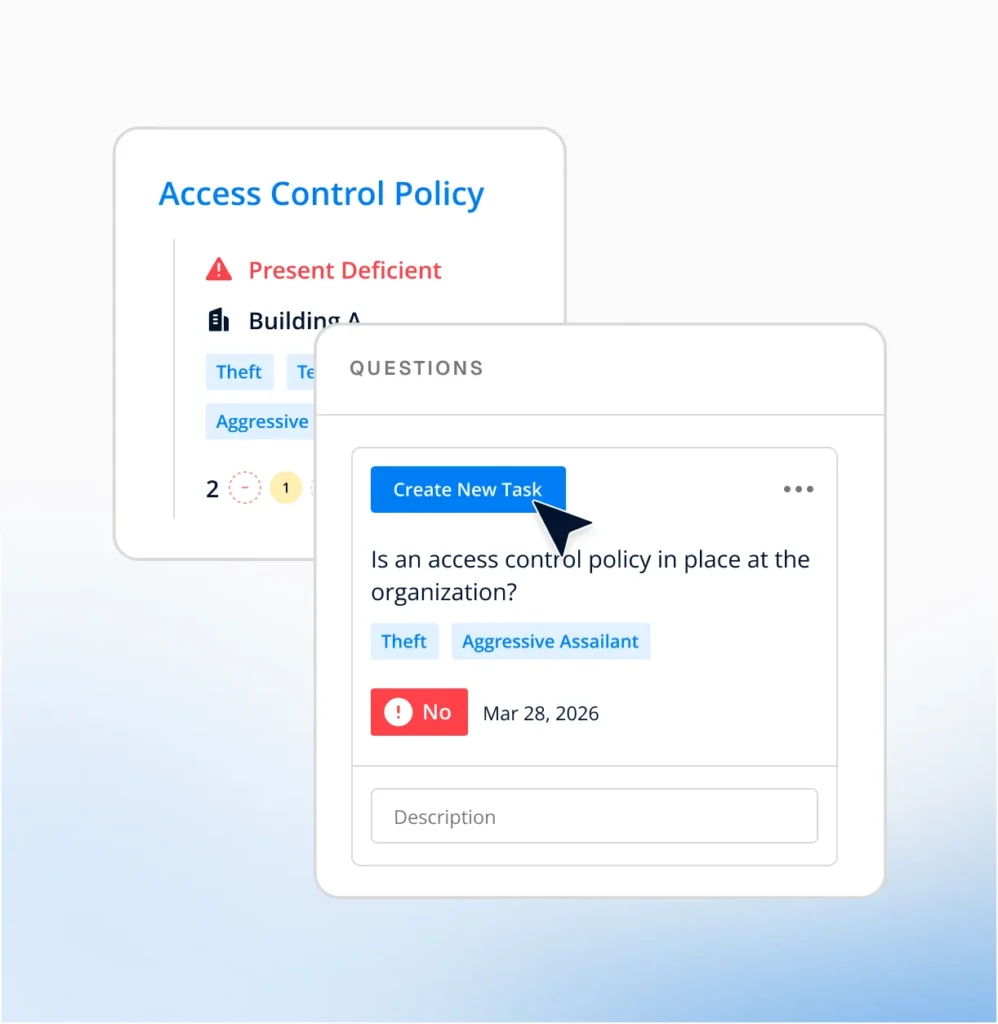
Every countermeasure and operational control at the location is evaluated against the specific requirements of the compliance framework being assessed. Controls are classified as compliant, deficient, or absent relative to the standard, producing a precise picture of where the location meets requirements and where it falls short.
Step 3 — Compliance Risk Score Alongside All Other Scenarios
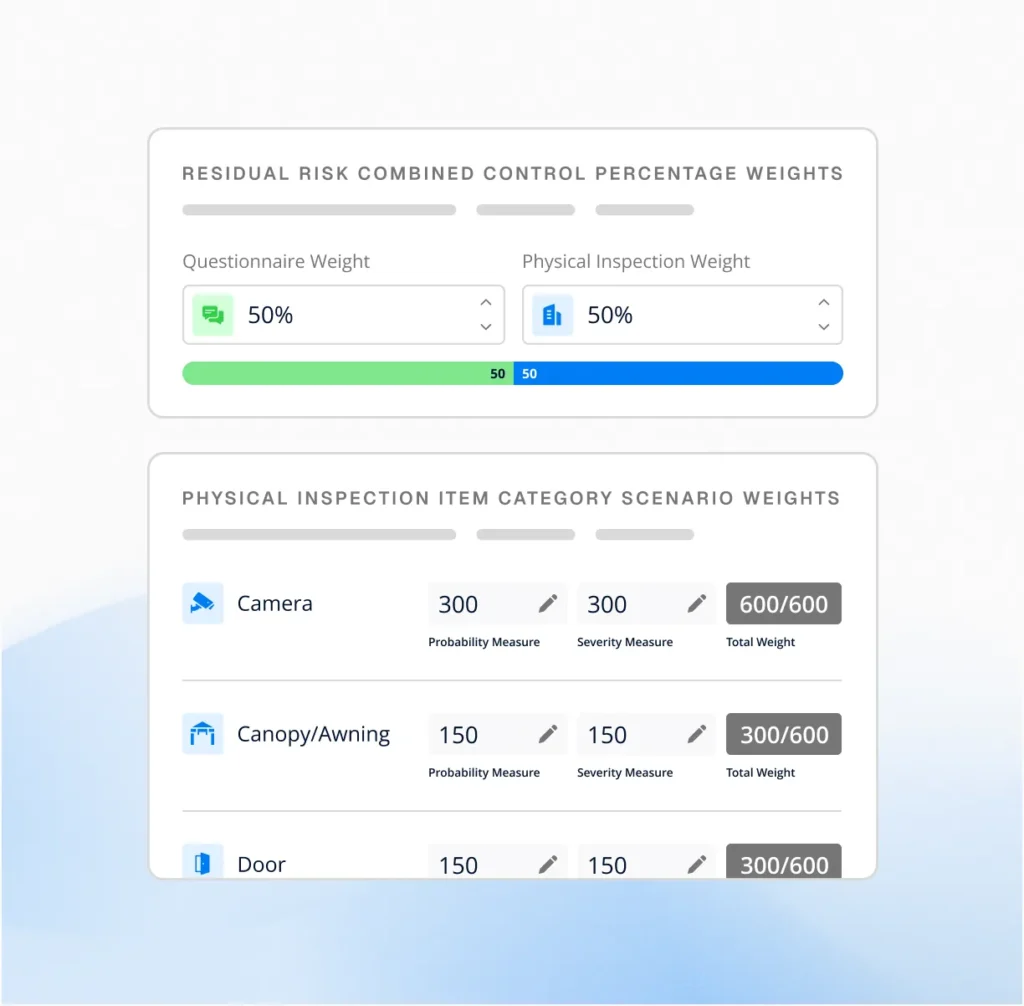
The resulting compliance risk score sits on the same residual risk dashboard as threat and hazard scores. Security and compliance leaders can see compliance exposure in context: how does the compliance risk at this location compare to its active shooter risk, its flood risk, its theft risk? Which scenario across the portfolio represents the greatest total exposure? This integrated view is what enables truly informed physical security investment decisions.


Compliance Assessments Grounded in ASIS International Standards
As a partner of ASIS International, Circadian Risk can convert ASIS compliance standards into structured assessment frameworks that carry the authority of the world’s leading security standards body. Organizations that assess compliance using ASIS-aligned frameworks produce results that are defensible in regulatory, legal, and insurance contexts in a way that internally developed checklists cannot match.
Frequently Asked Questions About Physical Security Compliance Assessment
How does Circadian Risk approach physical security compliance assessment differently than a standard audit?
A standard compliance audit produces a binary outcome: compliant or not compliant. Circadian Risk treats compliance as a risk scenario and produces a quantified compliance risk score that reflects the degree of exposure at a specific location relative to a specific standard. This means organizations can compare compliance risk across locations, prioritize remediation by its impact on the compliance risk score, and track improvement over time rather than waiting for the next audit cycle to assess progress.
What compliance frameworks does Circadian Risk support?
Circadian Risk currently supports CT-PAT, PCI DSS, Joint Commission healthcare standards, and ASIS International standards including the Physical Asset Protection standard and the K-12 School Security standard. The platform also supports custom internal compliance frameworks that organizations can incorporate alongside externally recognized standards.
Can Circadian Risk assess compliance and threat scenarios simultaneously at the same location?
Yes. Circadian Risk assesses every relevant scenario independently at every location, and all scenario scores including compliance, threat, and hazard scenarios appear on the same residual risk dashboard. This allows security and compliance leaders to see their complete risk picture in one place and make investment decisions that reflect the full range of exposure the organization faces.
How does Circadian Risk handle compliance standards that are updated or revised?
When a compliance standard is revised, Circadian Risk’s client success team works with the organization to update the relevant assessment framework within the platform. Because assessments are built as configurable frameworks rather than static forms, updates can be incorporated without rebuilding the entire program from scratch.
See How Circadian Risk Turns Compliance Requirements into Quantified Risk Scores
Walk through Circadian Risk’s compliance assessment frameworks with a member of our team. See how your organization’s compliance exposure would look when every standard, every location, and every gap are visible on one dashboard alongside your full physical risk profile.